FORLAND Marks Production of 7 Millionth Vehicle
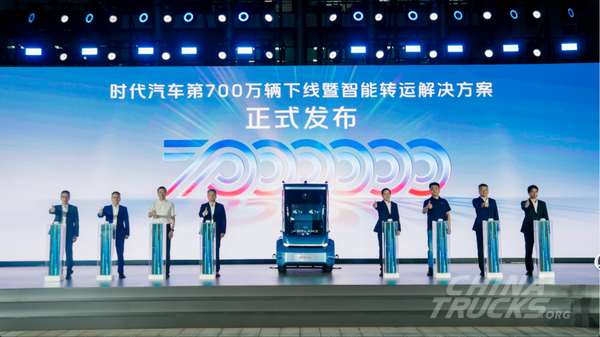
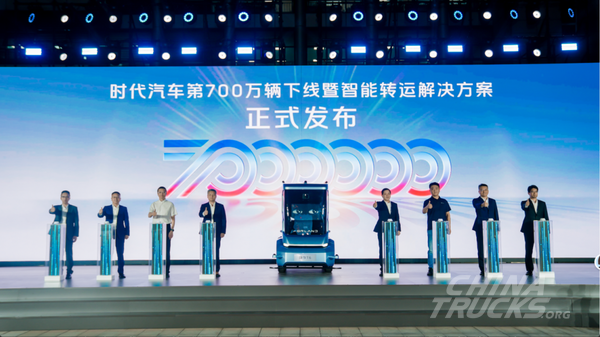
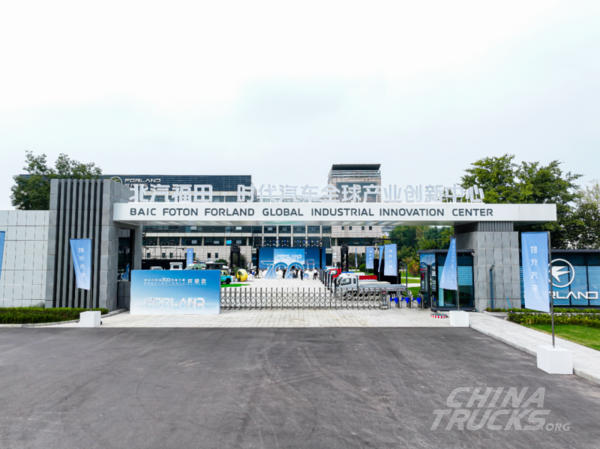
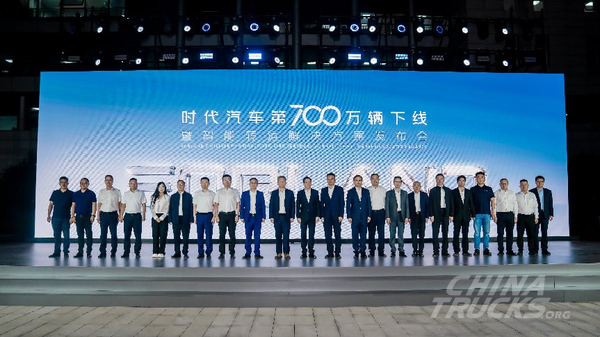
On the evening of September 28, FORLAND celebrated the production of its 7 millionth vehicle and launched JIEZUO, a new brand focused on intelligent transport solutions. The company also delivered the first batch of JIEZUO T6 vehicles and signed strategic cooperation agreements with customers from several industries.
More than 160 guests attended the event, including BAIC FOTON executives, FORLAND management, global dealers, key customers and media representatives.
The milestone marks a new stage in FORLAND's development. With the launch of JIEZUO, the company is expanding beyond traditional commercial vehicle manufacturing into smart logistics solutions.
From Truck Manufacturing to Smart Logistics
FORLAND's story began in August 1996, when the first FOTON vehicle rolled off the production line at the site. Over the past 30 years, its vehicles have served a wide range of applications, including urban and rural deliveries, construction, port operations and intercity transport.
Truck drivers have played an important role in this growth. Their daily experience and feedback have helped FORLAND improve its products and better meet customer needs.
Over 30 years, FORLAND has grown from producing a few thousand vehicles a year to reaching 7 million vehicles in cumulative production and sales. It reached its first million in four years, passed 3 million in 17 years and reached 6 million in 27 years. The company has also established a leading position in several market segments, including light trucks, construction trucks and heavy-duty mini trucks.
Deng Luhua, executive vice president of the FORLAND Business Unit at BAIC FOTON, said at the event that the 7 millionth vehicle was more than a production milestone.
As its intelligent vehicle technologies, new energy business and overseas operations continue to grow, FORLAND is moving from traditional truck manufacturing toward smart logistics solutions. The company aims to offer not only vehicles but also solutions tailored to different transport needs.
Building on Its Vehicle Business to Bring Autonomous Driving to Industrial Sites
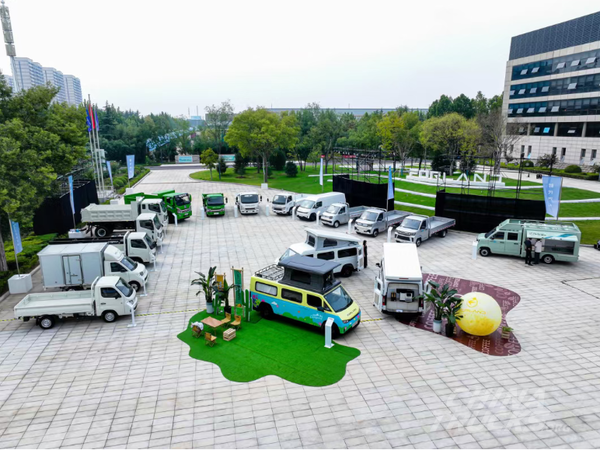
At the event, FORLAND displayed its Xiangling mini trucks, Linghang light trucks, RUIWO construction trucks and all-electric van lineup. These vehicles serve applications ranging from urban deliveries and construction to intercity transport and local commerce.
Xiangling focuses on urban delivery, offering strong load capacity at a competitive price. Linghang targets mid- to high-end light truck customers, with a focus on driving comfort, operating costs and intelligent features. RUIWO is designed for construction transport and demanding worksite conditions.
Over the past 30 years, FORLAND has continued to improve its vehicles based on real-world customer needs, with a focus on reliability, durability and operating costs.
Building on this vehicle business, FORLAND is now exploring commercial applications for autonomous driving, starting with controlled environments such as factories and industrial parks.
These sites typically have fixed routes, repetitive tasks and standardized transport processes, making them suitable for early applications of autonomous driving. At the event, the first batch of JIEZUO T6 vehicles was delivered, and several strategic cooperation agreements were signed. These projects will help test the solutions in real operations and assess their potential for wider use.
Short-distance transport within factories and industrial parks often involves frequent trips, including night shifts. Labor shortages and demanding working conditions can make these operations difficult to manage.
JIEZUO uses a human-machine collaboration model. Intelligent equipment takes on some repetitive, high-risk and night-time transport tasks, while workers can move into roles such as equipment monitoring, troubleshooting and maintenance.
JIEZUO Targets Multiple Industries and Addresses Concerns About Automation
JIEZUO was officially launched as FORLAND's new intelligent transport brand. As automation becomes more common, some drivers and other workers are concerned that autonomous systems could reduce job opportunities.
Deng said the name JIEZUO conveys the idea of a “masterpiece.” The brand focuses on three capabilities: responsive perception, convenient scheduling and fast transport. It is developed using FOTON's C-series Cangqiong technology and F10 intelligent platform.
Customers involved in the latest cooperation agreements come from logistics, tire manufacturing, power, home appliances and auto parts manufacturing. Their different operating environments will help test how well JIEZUO's solutions can adapt to different industries.
The solutions are designed to address four common challenges: moving goods into factories, transporting materials within warehouses, delivering materials to production lines on time, and coordinating deliveries during peak periods.
Although short-distance transport within factories accounts for a relatively small share of total transport mileage, it can take up considerable time. During peak production periods, factories may operate 24 hours a day, increasing pressure on staffing and daily operations.
To improve efficiency, JIEZUO uses technologies including OCC occupancy networks, barcode-based loading and unloading, and fleet coordination. It can also connect with factory management systems such as LES, WMS and TMS.
The system can identify and avoid obstacles in conditions involving rain, fog and dust, including irregularly shaped objects. It also records material handovers, allowing companies to track transport activities. Coordinated fleet scheduling helps improve efficiency and supports operations in challenging conditions, including night shifts and areas where people and vehicles share the same space.
JIEZUO is not designed simply to replace workers with machines. Instead, it aims to change how transport tasks are performed, reduce heavy and hazardous manual work, and create opportunities for workers to take on equipment management and maintenance roles.
Building Technology for Global Markets and Future Transport Applications
JIEZUO's commercial rollout is supported by its technical capabilities. The brand offers Level 4 autonomous driving capabilities, with its products developed to meet strict automotive-grade standards.
FORLAND plans to focus first on closed and semi-closed environments, such as factories and industrial parks. After gaining operational experience and proving the business model in these settings, the company will explore expanding into open-road applications.
FORLAND is also looking at future transport models that coordinate ground-based and aerial transport, aiming to expand the range of applications for smart logistics.
Beyond China, FORLAND vehicles are sold in more than 50 countries and regions. The company has established more than 400 sales outlets and over 200 service outlets worldwide.
Its international strategy goes beyond exporting vehicles. FORLAND is also working to bring Chinese suppliers and supporting industries into overseas markets and develop local operations. The goal is to expand from vehicle exports to a broader international business network.
Improving Logistics Efficiency Through Specialized Applications
As the logistics industry develops, growth increasingly depends on improving efficiency in specific operating scenarios, rather than simply adding more vehicles and transport capacity.
From urban and rural deliveries to long-distance transport and short-distance movements inside factories, many logistics operations still involve demanding and potentially hazardous work.
JIEZUO aims to automate suitable tasks, helping companies improve transport efficiency while reducing the workload and risks faced by frontline workers.
Guided by its brand philosophy, “Make Every Era Better, FORLAND, For You!”, FORLAND will continue to develop green and intelligent transport solutions while addressing the practical needs of drivers and other logistics workers.
By working with partners worldwide, the company aims to expand commercial vehicle applications and help improve productivity across the logistics industry.
The production of FORLAND's 7 millionth vehicle is not the finish line. It marks a new starting point for the company's next 30 years.
Views:0

Submit Your Requirements, We Are Always At Your Service.
- Chinese Commercial Vehicle Makers Set for Strong Showing at IAA 2026
- The 23rd China Int'l Transportation and Logistics Expo to Be Held in Zhengzhou
- China International Transportation and Logistics Expo Set for Zhengzhou in Nov.
- IAA TRANSPORTATION 2026 to Feature Over 150 World Premieres and New Products
- Visiting Invitation: See What's New from Renault Trucks at IAA 2026
- China's Heavy Truck Exports Surge in June as Leading Brands Win Major Orders
- JAC Becomes Official Vehicle Partner of Ghana Football Association
- Xuzhou Launches International Communication Center to Boost Global Outreach
- FOTON, COSCO Shipping Launch Joint Venture to Strengthen Global Supply Chain
- Foton, COSCO Shipping Move to Secure Capacity as China’s CV Exports Rise
- China’s Tractor Truck Sales Fall 8% in August, While January-August Sales Rise 20%
- China’s Mini-Truck Sales Fall 24% in August as Wuling Leads
- China’s Light Truck Sales Rise 12% in August, 2026
- China’s Medium-Duty Truck Sales Rise 6% in August as FAW TRUCKS and FOTON Lead the Market
- China’s Heavy-Duty Truck Sales Fall 15% in August as New-Energy Trucks Gain Share
- China’s Pickup Truck Sales Fall 16.54% in July to 16,898 Units
- China’s Mini Truck Sales Fall 31% in July to 22,400 Units
- China’s Light Truck Sales Rise 12% in July to 155,000 Units
- China’s Tractor Truck Sales Fall 14% in July to 30,000 Units
- China’s Medium-Duty Truck Sales Fall 6% in July 2026