
Fuel Taxes in China and Beijing's Balancing Act
China is preparing to implement a system of fuel pricing and tax reform on Jan. 1. The new policies have drawn criticism during their public comment phase, but the government has worked to deflect most complaints, and the precipitous drop in global crude prices in recent months has given Beijing the perfect opportunity to finally implement the reforms.
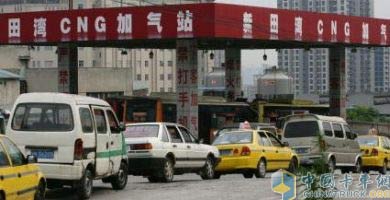 |
But while the reforms address some of the old system's problems, Beijing still must balance the sometimes competing interests and influences of the state budget, the national oil companies and the general population.
Under the new plan, the tax on gasoline will rise from 0.2 yuan (3 US cents) per liter to 1 yuan (15 US cents) per liter, while the tax on diesel will grow from 0.1 yuan (about 2 US cents) per liter to 0.8 yuan (12 US cents) per liter. The new fuel taxes will replace a handful of transportation-related fees and allow the gradual phasing out of several toll booths on second-tier highways. The taxes will be used to fund transportation infrastructure maintenance and development and provide subsidies to low-income and rural consumers, according to information released by the NDRC, Ministry of Finance, Ministry of Transport and Tax Bureau.
The biggest complaint from citizens, according to Chinese polls, is the size of the change in the fuel tax. To counter this criticism, and to lessen resistance to the changes, Xu Kunlin, deputy chief of the NDRC's pricing department, said Dec. 9 that consumer fuel prices will actually drop when the new taxes are implemented Jan. 1. This is because fuel prices, raised over the summer, would finally be lowered in line with falling global crude prices. Under the new system, fuel prices at the pump will be based nominally on the cost of crude plus a built-in profit margin for the oil companies, rather than effectively set by the state regardless of external factors.
If the current gasoline price were reverse-calculated under the new pricing structure, it would reflect an input of crude prices at around $83.50 per barrel, nearly twice the current price of just over $42 per barrel. Thus, Xu noted, when the new pricing measures go into effect Jan. 1, even with the higher taxes, the price per liter to the consumer will fall.
Consumer price is a major concern for the Chinese government due to the potential impact on social stability, and Beijing has long subsidized fuel costs. But with Chinese consumption rising and automobile use booming, the government is finding it difficult to maintain stable subsidized prices amid the drastic changes in global crude prices over the past several years. This became a particularly acute problem in 2008, as oil prices soared above the $140 per barrel mark. An estimate by China International Capital Corp. (CICC) during the peak of international oil prices in August put government expenditures on fuel subsidies at some 871.1 billion yuan (US$126.8 billion) for 2008, just shy of 3.5 percent of China's gross domestic product (GDP), compared to just 229 billion yuan (US$33.3 billion) - less than 1 percent of GDP - in 2007.
For Beijing, these sorts of numbers are becoming unsustainable. Furthermore, Chinese officials, particularly in urban areas, have been struggling to keep up with the changing dynamics of transportation infrastructure as automobile use rises rapidly. Shifting to a gasoline tax rather than annual taxes for automobile owners or toll collection on highways running between cities will more accurately reflect usage, and it could actually increase overall revenues collected. Plus, if it takes a few more cars off the road, Beijing and other major cities will not mind at the moment. (In fact, several cities have been implementing policies designed to reduce congestion and pollution by limiting automobile usage.)
But there is a third factor Beijing must consider: China's oil companies. No longer have small arms of the state drilling in Manchuria, Chinese oil companies grown in size and importance, both at home and abroad. (Both China Petroleum & Chemical Corp. and the China National Offshore Oil Corp. have major offices located across the street from China's Foreign Ministry.)
China's oil companies have become increasingly self-assured in their actions over the past few years, to the point of occasionally offering active resistance to Beijing's requests. This has been seen at times in overseas acquisitions that did not necessarily match central government plans, and, earlier this year, when the oil companies pressed Beijing to raise consumer fuel prices. When Beijing delayed for fear of the social impact, the Chinese companies simply slowed or shut down some of their refining operations, complaining that their margins had been squeezed to an unbearable point. They budged only when Beijing offered direct subsidies to the oil companies themselves.
Beijing remains stuck between the costs of continued subsidizing and the risks of letting fuel prices reflect global market prices - all while keeping the oil companies in line. The latest reforms do not alter this, but they might make it a little easier for Beijing to implement gradual changes in fuel prices, rather than wait until the pain of subsidies and pressure from the oil companies demand another instantaneous large jump.
Views:0

Submit Your Requirements, We Are Always At Your Service.
- Daimler Truck Fuel Cell Trucks Successfully Complete More Than 225,000 km 2025-09-18
- Cummins launches new Fuel System for Off-Highway Applications 2025-08-05
- XCMG Unveils New Hydrogen Fuel Cell Heavy Truck with Over 800km Range 2024-08-01
- 2023 Global Energy Transition High-level Forum Opened in Beijing 2023-09-21
- Weichai Releases World's First Commercialized High-power Metal-supported SOFC 2023-03-23
- DHL China Launched a Pilot Project for Hydrogen-fueled Trucks 2022-09-13
- Order Volume for Hydrogen Heavy Trucks in Two Months Surpassed the 10,000 Mark 2022-09-09
- Additional 1100 Units! Weichai’s Hydrogen Fuel Cell Are On a Fast Track 2022-09-02
- Order Summary: Hydrogen Fuel Cell Trucks Were Delivered Successively in China 2022-08-24
- 100 Jiefang Hydrogen Fuel Cell Heavy Trucks Delivered 2022-08-17
- Visiting Invitation: See What's New from Renault Trucks at IAA 2026
- China's Heavy Truck Exports Surge in June as Leading Brands Win Major Orders
- JAC Becomes Official Vehicle Partner of Ghana Football Association
- Xuzhou Launches International Communication Center to Boost Global Outreach
- FOTON, COSCO Shipping Launch Joint Venture to Strengthen Global Supply Chain
- Foton, COSCO Shipping Move to Secure Capacity as China’s CV Exports Rise
- The 11th DISCOVERY TRUST Awards Successfully Held in Beijing, China
- Chinese Heavy Truck Makers Shift to Value-Driven Global Expansion
- Shandong Heavy Industry and Kazakhstan’s Karaganda Region Ink New Deal
- China’s Diesel Trucks are Shifting to Electric

- China's New Energy Tractor Truck Sales Rise 97% to 25,000 Units in June
- China's Pickup Truck Sales Continue to Decline in May
- China's Tractor Truck Sales Up 27% in May
- China's Medium-Duty Truck Market Surges 74% in May
- China's Mini Truck Sales Drop 18% YoY in May
- China's Heavy Truck Sales Rise 23% in May
- China's Light Truck Market Grows 7% to 172,000 Units in May
- China’s Pickup Truck Market Posts Steady Sales Growth in April
- China Light Truck Sales Down 2% to 178,100 Units in April 2026
- China Heavy-Duty Truck Sales Hit 117,000 Units in April, Up 33% YoY